

Using observation, reflection, and student voice to assess SEL progress in Montessori Eelementary classrooms
In Montessori education, peace is not taught as a single lesson but cultivated as a lived experience. One of the most powerful pathways to peace is the intentional nurturing of social-emotional learning (SEL). When children learn to recognize and regulate their emotions, resolve conflicts with empathy, and collaborate respectfully, they lay the foundations for peaceful communities.
But how do Montessori teachers track something as dynamic and deeply personal as social-emotional growth? The answer lies in the triad of observation, reflection, and student voice, grounded in careful attention to the learning environment.
Observation: Seeing Beyond Behavior
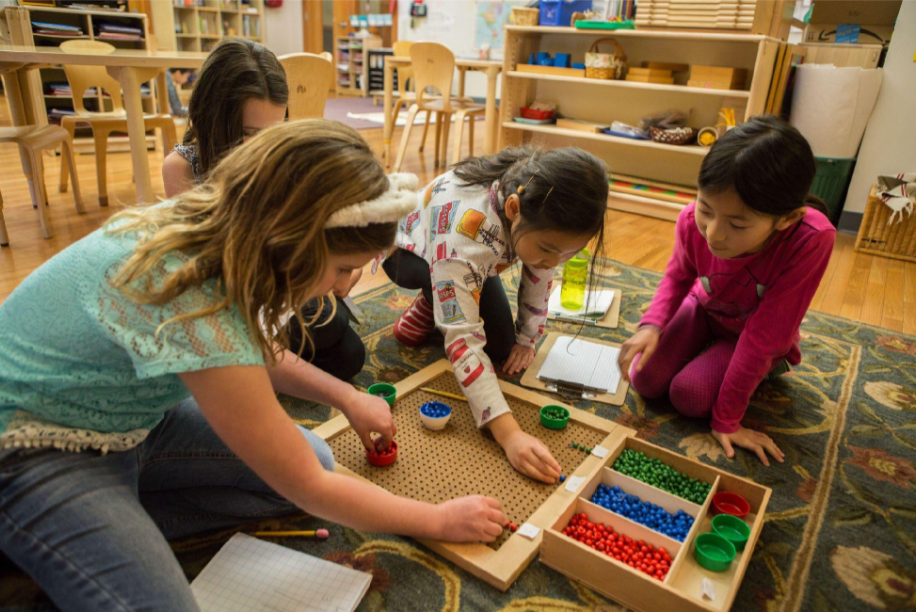
Borich (2014) emphasizes that “the environment itself is a teacher,” shaping both academic and social- emotional outcomes. This aligns with Montessori’s (1949/1995) principle of the prepared environment, where “the environment itself will teach the child, if every error he makes is manifest to him, without the intervention of a parent or teacher” (p. 94). For Montessori educators, observation is therefore a disciplined practice—studying the child’s interactions with the environment to support both academic and social-emotional growth.
Strategies for Observation:
- Peace Corners as Data Points: Track when, how, and why children choose to use a peace corner. Patterns can reveal which SEL skills are developing and which need scaffolding.
- Interaction Mapping: Note who collaborates with whom during work periods. Shifts in friendships, inclusivity, and group dynamics provide insight into the growth of empathy and a sense of belonging.
- Tone and Timing: Observe not just what children say but how and when. A calm voice after conflict or a pause before responding shows emotional regulation.
Student Voice: Inviting Children into the Process
Strategies for Elevating Student Voice:
- Peace Journals: Encourage students to reflect on a time they solved a problem peacefully, then share (voluntarily) with the class.
- Feelings Check-ins: Use visual tools like mood meters or color cards during morning meetings. Over time, track patterns to see if children are becoming more adept at naming and managing emotions.
- Student-Led Conferences: Allow children to highlight personal growth: “I used to get upset when I lost at a game, but now I can take a deep breath.”
Tracking Growth as a Path to Peace
When teachers use observation, reflection, and student voice to assess SEL, they are not “grading emotions.” Instead, they are honoring the child’s inner journey toward peace. Growth might look like a child pausing before reacting, a quiet student raising their hand, or two classmates solving a disagreement independently.
These small moments, when intentionally noticed and nurtured, accumulate into a culture of peace. And that, ultimately, is the heart of Montessori education: preparing children not just for academics, but for life in a more compassionate, equitable, and peaceful world.
Begin tomorrow by choosing one SEL practice to track—whether it’s recording peace corner usage, reflecting on tone in group discussions, or inviting students to share their own SEL insights. Over time, you’ll not only see progress, but you’ll also feel the classroom shift toward peace. Click here to utilize the AMS Social-Emotional Growth Observation & Reflection Tool that aligns with these strategies and Borich’s framework
References:
Borich, G. D. (2014). Observation skills for effective teaching (7th ed.). Routledge.
Montessori, M. (1995). The absorbent mind (C. A. Claremont, Trans.). Henry Holt & Co. (Original work published 1949)