

The American Montessori Society (AMS) is kicking off the 2026 Regional Labposium, Prepared and Ready: Montessori Meets the Moment, this September in Houston, Texas, before making four additional stops across the country. Designed to meet the needs of all Montessorians, this dynamic professional learning experience will create a space to thoughtfully reflect on the enduring relevance of Montessori education and the role of the prepared adult in guiding children within a changing world.
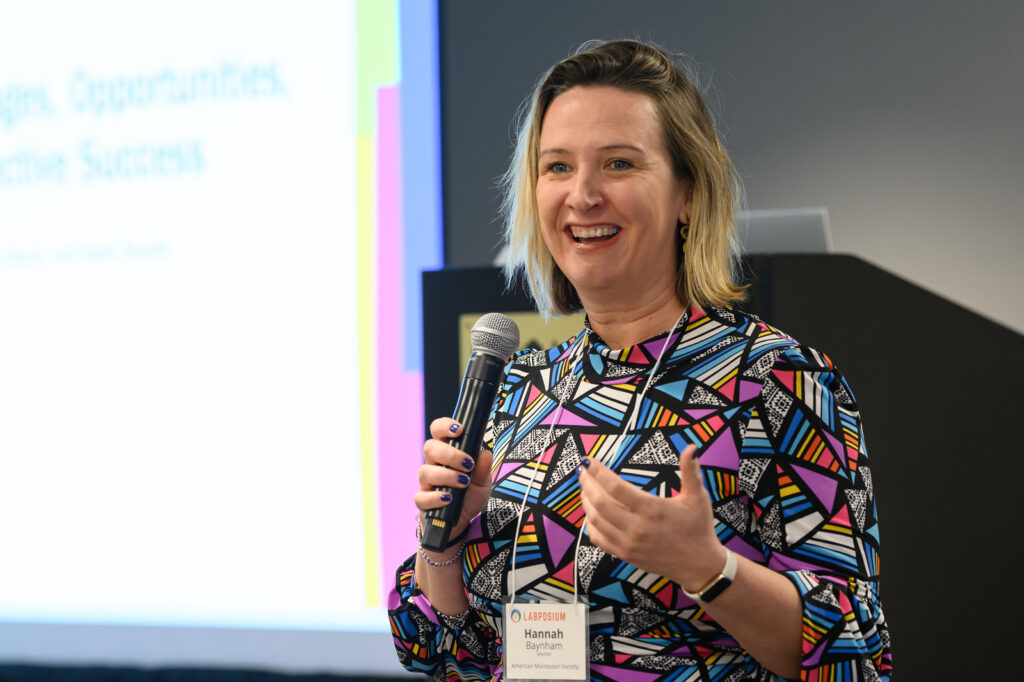
One of this year’s speakers is AMS’s own Hannah Baynham, who will lead the session “Called to the Child: Honoring Montessori in a Changing World.” Hannah serves as the Director of Montessori Learning and Content Development at AMS. Throughout her career, she has worked in early childhood education as a classroom teacher, school leader, and teacher educator across a variety of global settings. She is deeply passionate about Montessori philosophy, social justice, innovation, and empowering educators to better understand and nurture each child’s cosmic task.
We sat down with Hannah to discuss the upcoming Regional Labposium, where she shared insights into her professional journey, the inspiration behind her presentation, and her perspective on the future of Montessori education.
Can you give us an overview of what you will discuss during your sessions? What should attendees expect, and what are your key takeaways?
My session will explore Montessori philosophy and our calling to the spiritual preparation of self in order to best serve the child. Together, we will revisit the role of the environment and the adult to consider how we can better meet the needs of today’s children. Using AMS’s latest publication, Reconstructing the Constructive Triangle, we will examine which aspects of Montessori practice remain steadfast and where thoughtful adaptation may be needed to serve the children of tomorrow. I hope participants leave the session feeling inspired and optimistic about the future of Montessori, with a deeper understanding of and connection to the philosophy that keeps us grounded in the principles of our practice. Attendees can expect hands-on learning, active engagement, and plenty of fun! After all, learning is most meaningful when it is both playful and reflective.
Why is a topic like “Called to the Child: Honoring Montessori in a Changing World” relevant for Montessori educators today?
Being a Montessori teacher is a calling to work with children and a belief that education has the power to make a positive impact on the world. However, Montessori education began more than 100 years ago, and the world is changing rapidly. We are preparing children for a future that we ourselves cannot fully predict or understand. This is why this topic is so relevant. As Montessori educators, we must continually reflect on our preparation of self and our relationship with the environment. In doing so, we can ensure that our practices and interactions with children remain aligned with the knowledge, skills, and dispositions they will need to thrive in the future they will inherit.
How do you continue to learn and stay inspired in your own work?
I’m committed to lifelong learning, and there are so many ways to continue growing! As a Montessorian, I strongly believe in the power of the co-construction of learning. Whether I’m delivering a professional development session, leading a workshop, or engaging in conversations with colleagues, members and participants in our professional academy programs, learning goes both ways. I often leave these experiences with new ideas, fresh perspectives, and renewed inspiration. The primary way I stay inspired, however, is by observing in a Montessori school or Teacher Education Program. I try to do this at least once a month because it grounds me and reminds me that all this work is ultimately for the children.
Montessori education continues to evolve. What excites you most about where the movement is heading?
I am most excited about Montessori education becoming more accessible. Whether through Montessori public education, children learning from a bus, or Montessori programs in prisons, every child and every educator should have the opportunity to experience Montessori principles and methods. What excites me most is the idea that the Montessori classroom can extend beyond the walls of a school and be adapted in creative and meaningful ways to meet the unique needs of different communities. As our world continues to evolve, so must Montessori. I’m excited to be part of AMS and its mission to expand access to high-quality Montessori education around the world.
We invite you to join us at the 2026 Regional Labposium to take part in this exciting workshop with Hannah and our other key speaker, Samantha Gleisten. This is an opportunity to connect with your fellow Montessori educators and leaders, engage in meaningful conversations about how AI may directly impact school operations and future planning, and gain practical language and tools that will help shape the future of Montessori education. Find a city near you and register today!